Take Care of the Dog
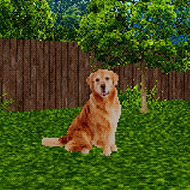
Game guide at a glance
You fill DOG’s bowl for the third night in a row, and something about the way DOG watches you do it stops feeling like affection.
Quick facts
- Developer
- bodinho
- Release
- 2026
- Platform
- Web browser
- Views
- 53
- Added
- 2026-07-26
You fill DOG’s bowl for the third night in a row, and something about the way DOG watches you do it stops feeling like affection. That small shift in tone is the entire engine behind Take Care of the Dog, a short retro-styled horror piece that opens as a cozy chore simulator and slowly reveals it was never that at all.
Feeding and Watching in Take Care of the Dog
The opening stretch plays exactly as the title promises. You walk the house in a low-poly, PSX-inspired first-person view, filling DOG’s bowl, checking on the basement, and clicking through small interactions the game never over-explains. Nothing about the controls is complicated – movement and a single mouse click cover almost everything you’ll do.
What makes this section work is restraint. Players expecting a jump scare every few minutes get restless, while those who enjoy slow-burn atmosphere pick up on small wrongness cues earlier – a sound that plays a half-second too long, a room that seems rearranged from your last visit.
By the time you’ve gone through a couple of feeding cycles, the routine itself starts to feel like the threat.
When DOG Stops Acting Like a Dog
Community discussion keeps circling back to one moment players call “the betrayal” – the point where DOG’s behavior breaks the pattern you’ve settled into and a skinwalker-adjacent implication becomes hard to ignore. It’s not a jump scare so much as a recontextualization of everything you did in the previous minutes.
This is also where the game gets genuinely divisive. Some players find the tonal pivot brilliant for recasting a mundane chore loop as sinister in hindsight. Others feel the shift arrives too abruptly for a story this short.
Either way, once DOG stops behaving like a normal pet, the basement stops feeling optional.
The Basement and What Waits Below
Water in the basement is one of the few specific, named points of interest players reference directly, and it functions as a quiet pressure valve the game keeps pulling your attention toward. Exploring it early feels premature; avoiding it entirely feels wrong once the story escalates.
Newcomers often rush straight down there looking for answers, only to find the basement rewards patience – most of its impact lands after you’ve spent time upstairs with DOG first.
Completionists chasing every ending treat basement visits as a checklist item, while first-time players usually stumble into it by accident.
Sound as the Real Threat in Take Care of the Dog
Ask any regular what stuck with them and the answer is almost always audio, not visuals. The recommendation to play at night with a headset isn’t a gimmick – directional sound cues carry the tension, from footsteps that don’t match your own movement to ambient noise that shifts register without warning.
This design rewards a specific kind of player: one who plays slowly, listens instead of rushing between objectives, and treats silence as information.
It’s a short experience, but the sound design is what’s consistently cited as the reason it lingers.
- Feed and check on DOG regularly before exploring further
- Pay attention to audio cues rather than just visual changes
- Visit the basement once the upstairs routine starts feeling off
- The routine feels ordinary during the first feeding cycles
- Small inconsistencies in DOG’s behavior begin appearing
- The basement becomes impossible to ignore
- The story recontextualizes everything that came before it
Endings and Replay Value in Take Care of the Dog
The game supports more than one outcome depending on how you engage with DOG and the basement, which gives it a small but real reason to revisit despite its short length. Players comparing notes frequently disagree about which ending counts as the “true” one, since the game never flags it.
That ambiguity is arguably the point – a story this compact about a subject this unsettling benefits from letting players sit with uncertainty.
- Does the dog’s name ever get revealed? The game refers to it simply as DOG throughout, and that plain, capitalized naming is part of what makes its later behavior feel unsettling.
- Is Take Care of the Dog heavy on jump scares? No, it leans on atmosphere, sound design, and a slow tonal shift, which is why players recommend playing it at night with headphones.
- How long does a full playthrough take? It’s built for a single sitting, short enough to replay for a different ending but long enough that the basement and DOG’s shift both land.
Take Care of the Dog earns its reputation less through shock than through the quiet dread it builds around one bowl, one basement, and one dog that stops acting like DOG should.