Media↗
Toca Boo app review — Horn Book
Gentle, humorous scares with pizzicato strings and lots of giggles — classic Toca Boca creativity for kids.
Read discussion →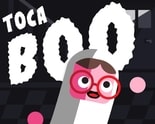
In Toca Boo you start out as a ghost stuck in a house that’s about to be sold out from under you, which matters immediately because the entire game is built around stopping that sale before it closes.
In Toca Boo you start out as a ghost stuck in a house that’s about to be sold out from under you, which matters immediately because the entire game is built around stopping that sale before it closes.
| Genre | Short Survival / Comedy Horror |
| Role | House-bound ghost |
| Goal | Scare off potential buyers |
Toca Boo puts you in control of a ghost who is, by the game’s own framing, lonely and fairly good-hearted — though that’s not how the visitors touring the house are going to experience the encounter. Your job across each short session is to make sure the house doesn’t get bought, which means using whatever’s available in the environment to unsettle the people walking through it. Environmental scares are the primary tool here: slamming doors, flickering lights, and moving objects at the right moment do more work than any direct confrontation would.
The game plays fast, with runs typically wrapping up quickly rather than dragging into a long survival loop, and that pacing is deliberate — it’s built to be replayed rather than sat with for hours in one sitting.
What players tend to bring up in discussion is how the ghost’s motivation complicates the usual haunted-house premise. You’re not trying to hurt anyone; you’re trying to stay in the only home you’ve got, and the humor in Toca Boo comes from how mismatched that sympathetic goal is against how genuinely creepy the buyers find the experience. That tension — comedic on your end, unsettling on theirs — is a big part of why the game reads as lighter than its haunted-house premise suggests on paper.
New players often try to scare every visitor the same way, repeating whatever startled the first buyer successfully. Toca Boo rewards variety instead — buyers react differently depending on where they are in the house and what they’ve already seen, so leaning on one trick repeatedly tends to lose effectiveness by the second or third attempt in a single run.
The other common early mistake is rushing straight for the loudest scare available instead of reading the room first. A slower buildup — a door creaking before it slams — tends to land better than an immediate jump scare with no setup at all.
By the time the last buyer bolts for the door in Toca Boo, what sticks isn’t the scare itself but the small, strange sympathy the game builds for a ghost who just wants to keep the lights of an empty house on for one more night.
Your job across each short session is to make sure the house doesn’t get bought, which means using whatever’s available in the environment to unsettle the people walking through it.
The game plays fast, with runs typically wrapping up quickly rather than dragging into a long survival loop, and that pacing is deliberate — it’s built to be replayed rather than sat with for hours in one sitting.
What players tend to bring up in discussion is how the ghost’s motivation complicates the usual haunted-house premise.
New players often try to scare every visitor the same way, repeating whatever startled the first buyer successfully.
Toca Boo rewards variety instead — buyers react differently depending on where they are in the house and what they’ve already seen, so leaning on one trick repeatedly tends to lose effectiveness by the second or third attempt in a single run.
Tips are drawn from the game guide on this page.


A family-friendly spook from Toca Boca — sneak through the house without waking the ghost.
Gentle, humorous scares with pizzicato strings and lots of giggles — classic Toca Boca creativity for kids.
Read discussion →No in-app purchases, ads or social features; an open-ended structure with no manipulative engagement mechanics.
Read discussion →Yes — every game on this site is 100% free. No download, no account and no paywall; press Play and the game loads right in your browser.
Most browser games here run on phones and tablets, though a few titles play best on desktop. If the page loads, the game is playable — just allow mic access where requested.
The guides section covers voice games in depth — from first-session setup and mic fixes to building voice packs. For this game specifically, the guide on this page walks through the details.