Media↗
Class of ’09: The Flipside review — The Mary Sue
The trilogy is known for its dark themes — drug abuse, harassment, depression and bullying — and the finale is a contentious but distinct experience.
Read discussion →
You have just transferred to a third high school in as many years, your phone already buzzing with a text from a boy you met eight hours ago, while your new best friend types something sarcastic before you’ve finished reading it.
You have just transferred to a third high school in as many years, your phone already buzzing with a text from a boy you met eight hours ago, while your new best friend types something sarcastic before you’ve finished reading it. That is how Class of ’09 drops you into Nicole’s junior year, and within the first few days it is clear this will not play like a typical visual novel about first crushes.
Nicole arrives at LHS having moved around constantly because of her mother’s divorces, carrying her estranged father’s recent death in the background of nearly every scene. Class of ’09 never turns this into melodrama; it sits there quietly while Nicole cracks jokes, texts Jecka, and tries to figure out where she fits at a school with its own rumor mill already running.
What beginners often misjudge is how much the game wants you to read Nicole’s humor as a defense mechanism, not simple comic relief. Her sarcasm toward Crispin, Jeffery, and Kylar, the three classmates pursuing her, reads as funny at first and sadder once you notice a girl who deflects instead of engaging. By winter, small humiliations and quiet warning signs pile up until comedy and dread run side by side.
Jecka is the emotional anchor of Class of ’09, the one relationship that stays mostly stable while everything else in Nicole’s life wobbles. Crispin, Jeffery, and Kylar each pursue Nicole with different approaches, and the game is famous in its community for letting you respond to all three with anything from genuine interest to outright cruelty.
Community shorthand calls Class of ’09 a rejection sim, since many endings hinge on how thoroughly Nicole shuts these boys down rather than how she falls for one of them.
Every major decision arrives through Nicole’s phone, a Sidekick buzzing with messages from Jecka and the boys circling her. Choosing how to reply, or when not to, steers the story toward one of fifteen endings, from Nicole transferring schools again to outcomes far darker than a typical prom-night visual novel would attempt. Advanced players replay Class of ’09 to chase the uglier routes, since the darkest material isn’t gated behind hidden menus; it’s baked into ordinary-looking choices that seem harmless at the time.
Underneath the romantic comedy framing, Class of ’09 spends real time on adults at LHS failing the students in their care. A photography teacher pushing extremist rhetoric, and coaches and counselors with predatory habits, both surface as the year goes on, and Nicole’s ability to navigate or avoid them matters as much as any romantic route. The jokes keep coming, voiced in full across the cast, even as the plot underneath gets heavier, and players have praised how rare a fully voiced script this large is for the genre.
Not everyone agrees the tonal whiplash works. A frequent debate is whether the comedy undercuts the darker threads, or whether that friction is the point of an anti-visual novel refusing comfort. Reviewers note the experience grows progressively more depressing the more routes you explore, which splits opinion. What almost nobody disputes is the writing and cast carrying material this unstable without collapsing into pure comedy or pure tragedy.
Class of ’09 works because it never lets Nicole, or the player, settle into one mode for long. A text from Jecka turns a tense hallway scene funny again, and one choice aimed at Crispin or Kylar turns a joke into something you did not see coming.
That is how Class of ’09 drops you into Nicole’s junior year, and within the first few days it is clear this will not play like a typical visual novel about first crushes.
Her sarcasm toward Crispin, Jeffery, and Kylar, the three classmates pursuing her, reads as funny at first and sadder once you notice a girl who deflects instead of engaging.
A photography teacher pushing extremist rhetoric, and coaches and counselors with predatory habits, both surface as the year goes on, and Nicole’s ability to navigate or avoid them matters as much as any romantic route.
The jokes keep coming, voiced in full across the cast, even as the plot underneath gets heavier, and players have praised how rare a fully voiced script this large is for the genre.
Every line across the branching script is voice-acted, the comedy aims for genuinely funny rather than ironic filler, and it is openly built as an anti-visual novel resisting the genre’s usual comfort.
Tips are drawn from the game guide on this page.


![CLASS OF '09 Gameplay 100% Walkthrough (All Endings) FULL GAME [4K UHD]](https://i.ytimg.com/vi/YizoXAom8uo/hqdefault.jpg)
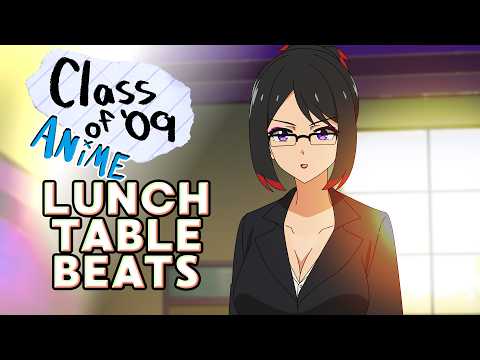
A satirical visual novel about high school and teenage life by SBN3.
The trilogy is known for its dark themes — drug abuse, harassment, depression and bullying — and the finale is a contentious but distinct experience.
Read discussion →A player calls it deeply misunderstood, told from a less manipulative and cynical perspective than the earlier games.
Read discussion →Yes — every game on this site is 100% free. No download, no account and no paywall; press Play and the game loads right in your browser.
Most browser games here run on phones and tablets, though a few titles play best on desktop. If the page loads, the game is playable — just allow mic access where requested.
The guides section covers voice games in depth — from first-session setup and mic fixes to building voice packs. For this game specifically, the guide on this page walks through the details.