App reviews↗
Master Chess — user reviews
Classic chess gameplay and online play are appreciated, but connection drops and ad interruptions are common complaints.
Read discussion →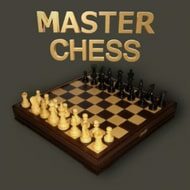
How much fight can three stars of difficulty actually put up on a browser chess board?
How much fight can three stars of difficulty actually put up on a browser chess board? That question is the whole appeal of Master Chess, a straightforward implementation of the standard game that skips gimmicks in favor of highlighted legal moves, a clean click-to-move board, and an AI opponent that a fair number of players admit caught them off guard the first time they nudged the difficulty past the easiest setting.
Selecting a piece highlights every square it can legally reach, which sounds minor until you realize how much slower and more error-prone standard chess feels without that guide. Clicking or tapping a highlighted square completes the move, and the AI responds almost immediately in solo mode.
There’s no elaborate tutorial layer sitting between you and the board — the game trusts you already know how a knight moves or why a bishop stays on one color, and gets out of the way to let you play.
New players who haven’t touched a real board in years tend to lean on the highlighted squares constantly at first, then notice themselves checking them less by their third or fourth game once piece movement comes back to them.
Two-player mode hands the board to a second person on the same device, alternating turns with no AI involved at all, which makes it the default choice for anyone teaching a friend or sibling the rules for the first time. Solo mode is where the AI opponent actually shows up, and it’s the mode most of the difficulty conversation revolves around.
Switching between the two takes one menu tap, so plenty of players test an opening idea against another human before taking the same setup into a solo match against the AI.
Casual players who just want to pass a device back and forth tend to stick with two-player mode almost exclusively, treating the AI matches as a separate, more serious activity entirely.
The single-star, double-star, and triple-star settings aren’t just cosmetic labels — each jump noticeably changes how far ahead the AI plans and how willing it is to sacrifice material for a longer-term attack.
Jumping straight to three stars without spending time on the lower settings is a common early mistake, since the top level punishes the kind of loose, instinct-driven moves that work fine against a one-star opponent.
Turning the clock on adds real pressure to every decision, since a player who overthinks one move can burn enough time to fall behind on the whole game, not just that position.
The untimed option strips that pressure away entirely, which is exactly why it gets recommended to anyone still working out how pieces interact or double-checking whether a move actually avoids check before committing to it.
Competitive-minded players tend to gravitate toward timed turns specifically because it forces the same quick decision-making that ranked matchmaking chess demands, while players still learning the rules almost always start untimed.
The full standard rulebook carries over here: castling still lets the king tuck away behind a rook early in a game, a pawn that survives the walk to the far rank still promotes into a stronger piece, and a stalemate still ends the game as a draw rather than a loss for whoever’s stuck without a legal move.
Beginners frequently miss the castling window entirely, leaving the king stuck in the center of the board long after both players have started trading pieces, which is exactly the kind of exposed king position the two-star and three-star AI settings are built to punish.
Recognizing an approaching stalemate matters too — plenty of players who are winning comfortably on material accidentally strip their opponent of every legal move and end a game they should have won outright.
Early in a game, the difference between a comfortable position and a cramped one usually comes down to whether both bishops and the knights got developed before pawns started advancing recklessly. Rushing pawns forward for quick threats looks aggressive but tends to leave squares weak for the rest of the game.
Piece value is the other habit worth building early: trading a knight for a pawn out of frustration feels satisfying for a second and terrible for the next twenty moves. The AI, even at one star, is quick to punish that kind of lopsided trade once it reaches two-star strength.
By the time a match reaches its middle stretch, players who kept their king castled and their pieces developed usually have far more options on the board than opponents who spent the opening chasing isolated pawns.
Beyond the AI and local two-player option, the game offers matchmaking against other people, plus the ability to set up custom games and small tournaments with friends instead of a stranger. That third mode turns solo practice against the AI into something closer to a running rivalry with people you actually know.
Matchmaking removes the guesswork of finding an opponent your own level, though it also means the AI’s fixed difficulty stars stop being the yardstick, since human opponents don’t play with the same predictable patterns a one-star or three-star setting does.
Players chasing a longer-term goal, like building a personal win streak, tend to favor the custom tournament option since it lets them track results across several games with the same small group instead of one-off matches.
One honest limitation the game doesn’t hide is that its AI carries no official chess federation endorsement, which matters to serious players who want a difficulty setting to map onto a real rating rather than a star count. For casual play that distinction barely registers.
At the same time, the three-star setting has built a reputation for being tougher than its simple star icon suggests, and that gap between expectation and reality is part of why the top difficulty gets brought up so often in comments sections.
Whether that’s a strength or a flaw depends entirely on what a player wanted going in — a quick casual match or a genuine test of their opening preparation.
Master Chess doesn’t dress up the game with unnecessary extras, and that’s exactly its appeal: a highlighted-move board, three honest difficulty stars, and enough modes — solo, two-player, and matchmaking — to cover anyone from someone relearning how a rook moves to a player chasing a real win streak against the three-star AI.
New players who haven’t touched a real board in years tend to lean on the highlighted squares constantly at first, then notice themselves checking them less by their third or fourth game once piece movement comes back to them.
Two-player mode hands the board to a second person on the same device, alternating turns with no AI involved at all, which makes it the default choice for anyone teaching a friend or sibling the rules for the first time.
Casual players who just want to pass a device back and forth tend to stick with two-player mode almost exclusively, treating the AI matches as a separate, more serious activity entirely.
Competitive-minded players tend to gravitate toward timed turns specifically because it forces the same quick decision-making that ranked matchmaking chess demands, while players still learning the rules almost always start untimed.
Recognizing an approaching stalemate matters too — plenty of players who are winning comfortably on material accidentally strip their opponent of every legal move and end a game they should have won outright.
Tips are drawn from the game guide on this page.


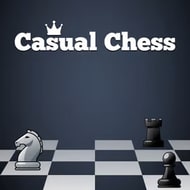
A casual online chess game with single-player and multiplayer options — pick a difficulty, play the AI or face a friend.
Classic chess gameplay and online play are appreciated, but connection drops and ad interruptions are common complaints.
Read discussion →Yes — every game on this site is 100% free. No download, no account and no paywall; press Play and the game loads right in your browser.
Most browser games here run on phones and tablets, though a few titles play best on desktop. If the page loads, the game is playable — just allow mic access where requested.
The guides section covers voice games in depth — from first-session setup and mic fixes to building voice packs. For this game specifically, the guide on this page walks through the details.