User reviews↗
Right Click to Necromance review — Backloggd
Shockingly addictive for such a short experience: watching your numbers grow is satisfying for about an hour.
Read discussion →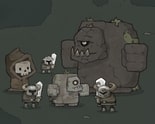
What’s the fastest way to build an undead army without lifting a shovel yourself?
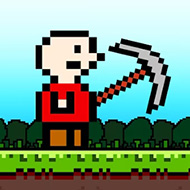
What’s the fastest way to build an undead army without lifting a shovel yourself? In Right Click to Necromance, the answer is exactly what the title promises — a single click sends your necromancer out to dig up bones, and everything else about the game grows out of that one action.
| Genre | Incremental Clicker |
| Currency | Bones |
| Army Units | Skeletons, warriors, wizards |
The core loop of Right Click to Necromance is deceptively simple: right-clicking excavates bones, and bones fund the resurrection of an increasingly varied undead army. Skeleton foot soldiers come first, cheap and disposable, but the bone economy quickly opens the door to warrior and wizard units that cost far more but pull noticeably more weight once unlocked. Balancing how many bones to sink into cheap early units versus saving up for a wizard is one of the first real decisions the game asks of you, and it’s a decision that shapes how fast the rest of the run snowballs.
What keeps the clicking from feeling like empty repetition is the visible payoff — every new skeleton or wizard actually shows up on screen, so the army you’re building is something you watch grow rather than a number ticking up in a menu somewhere.
New players tend to spend bones the instant they’re available, grabbing the cheapest skeleton unit repeatedly instead of holding out for a wizard that multiplies value later. Early restraint pays off — a bone economy that funds one strong wizard tends to outperform one spread thin across a dozen basic skeletons.
The other common mistake is treating clicking speed as the only variable that matters. Once warriors and wizards enter the picture, the composition of your undead army starts mattering as much as raw click output, and ignoring that balance is where a lot of early runs stall out.
The game keeps scaling as long as your bone income supports it, so the practical limit is how efficiently you’re managing the balance between skeletons, warriors, and wizards rather than a hard cap.
It depends on where you are in a run — wizards cost more but tend to offer better long-term value, while warriors fill the gap between cheap skeletons and the wizard tier more affordably.
There’s something quietly satisfying about watching a single right-click habit turn into a full undead army in Right Click to Necromance, and that satisfaction is really the entire pitch of the game distilled into one action.
Balancing how many bones to sink into cheap early units versus saving up for a wizard is one of the first real decisions the game asks of you, and it’s a decision that shapes how fast the rest of the run snowballs.
What keeps the clicking from feeling like empty repetition is the visible payoff — every new skeleton or wizard actually shows up on screen, so the army you’re building is something you watch grow rather than a number ticking up in a menu somewhere.
New players tend to spend bones the instant they’re available, grabbing the cheapest skeleton unit repeatedly instead of holding out for a wizard that multiplies value later.
It depends on where you are in a run — wizards cost more but tend to offer better long-term value, while warriors fill the gap between cheap skeletons and the wizard tier more affordably.
Tips are drawn from the game guide on this page.


A 48-hour Indie Speed Run game by Juicy Beast — raise an undead army and win as fast as you can.
Shockingly addictive for such a short experience: watching your numbers grow is satisfying for about an hour.
Read discussion →Players debate difficulty and tactics, agreeing the foundation is solid with room to grow.
Read discussion →Yes — every game on this site is 100% free. No download, no account and no paywall; press Play and the game loads right in your browser.
Most browser games here run on phones and tablets, though a few titles play best on desktop. If the page loads, the game is playable — just allow mic access where requested.
The guides section covers voice games in depth — from first-session setup and mic fixes to building voice packs. For this game specifically, the guide on this page walks through the details.