Chessformer
Game guide at a glance
You click on a rook, watch it glide three squares north the way it would on a real board, and then keep watching as it just falls, dropping straight down until it lands on a ledge or thuds onto another piece.
Quick facts
- Developer
- Robert Alvarez
- Release
- 2021
- Platform
- Web browser
- Views
- 56
- Added
- 2026-07-29
You click on a rook, watch it glide three squares north the way it would on a real board, and then keep watching as it just falls, dropping straight down until it lands on a ledge or thuds onto another piece. That fall is the whole idea behind Chessformer: familiar chess moves dropped into a puzzle-platformer where gravity gets the final say on where every piece ends up.
Moving Chessformer’s Pieces the Way Gravity Wants
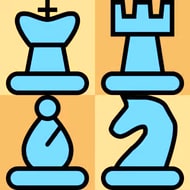
Every piece still follows its normal chess rulebook — the rook slides in straight lines, the bishop only cuts diagonals, the knight hops in its usual L-shape — but the instant the move ends, gravity pulls the piece straight down until something stops it.
The red king never moves, so there’s no fear of losing material, but that doesn’t make the game easy. The challenge shifts onto sequencing, since which piece falls first can decide whether the next move is even possible.
Chess-savvy players tend to adapt fastest here, since reading diagonals and straight lines is already second nature to them before gravity ever enters the picture.
Pawns, Promotion, and Switches in Chessformer
The earliest stages keep the roster small — rook, bishop, and knight carry the first batch of puzzles while you adjust to the falling behavior. Pawns don’t show up until around level 10, and true to their real quirk, they only push forward one square before gravity yanks them back down.
A few levels later, pawn promotion enters the picture: a pawn that reaches the top platform turns into a stronger piece, a mechanic more than one player has admitted “took a while to figure out” the first time it appeared.
Past the midpoint, purple switch blocks show up alongside keys and doors. Triggering a switch can open a path forward, but it can also seal off a piece left behind at the wrong moment, and that piece is gone for the rest of the level.
Stacking Pieces to Reach the Red King
Stacking is the technique that separates players who breeze through Chessformer from players stuck on the same level for an hour. A fallen piece becomes solid ground for whatever drops next, so you can deliberately park a knight under the spot where a rook needs to land.
- Drop a knight first to build a low platform in tight spaces.
- Stack a bishop out of a rook’s landing path so it doesn’t block the route.
- Save your last piece for the final approach so nothing lands on it by accident.
The last level leans on this idea harder than anything before it, asking you to combine pawns, switches, keys, and stacked towers just to get one piece within striking distance of the king.
Where New Players Get Stuck in Chessformer
The most common early mistake is moving a piece without thinking about where it will land, since the instinct from real chess is to worry only about the destination square. Here that destination is temporary the instant gravity kicks in.
Plenty of first attempts fail because a rook that looked perfectly placed slides off a ledge and drops somewhere useless. Puzzle-focused players usually fix this by mentally tracing the fall before committing to a move.
More experimental players just move pieces and adjust on the fly, restarting the level whenever a fall wrecks the setup they were building toward.
Is Chessformer based on real chess rules?
Yes — every piece moves exactly the way it would on a standard board, with the rook, bishop, knight, and pawn following their real movement patterns before gravity pulls them down.
Why does my piece keep falling after I move it?
Falling is the core mechanic, not a bug: any piece not resting on a platform or another piece drops straight down until it lands, turning ordinary chess moves into physical puzzles.
What happens after pawn promotion?
A pawn that reaches the topmost platform on levels built around this mechanic turns into a stronger piece, opening move options a plain pawn never had for the rest of that stage.
Some players find the difficulty spike in the last handful of levels a little unfair after such a gentle rise through pawns and switches, and that jump is one of the more debated parts of Chessformer in comments sections. Even so, the moment a stacked tower finally puts a bishop within diagonal reach of the red king tends to be the payoff that keeps people coming back for one more stage.