App reviews↗
Chicken Merge — Google Play reviews
Rated 4.7: cute animations, optional ads and satisfying merges, though some players find the late upgrade curve steep.
Read discussion →
You drop a second matching chicken onto the first one sitting in your grid, watch them fuse into something visibly bigger and meaner, then drag it straight into the row facing the road before the next wave rounds the corner.
You drop a second matching chicken onto the first one sitting in your grid, watch them fuse into something visibly bigger and meaner, then drag it straight into the row facing the road before the next wave rounds the corner. That single motion, repeated dozens of times a minute, is the whole rhythm of Chicken Merge, and it never really stops feeling satisfying even once you’ve done it a hundred times.
| Genre | Merge tower defense |
| Core Mechanic | Fuse matching chickens, then defend a lane from incoming waves |
| Platform | Browser and desktop app |
Chicken Merge splits its screen into a 2×6 growth field, where new chickens are bought and merged, and a 1×6 battle line directly in front of your base, where whatever you drag forward starts shooting automatically. That separation is the entire strategic tension of the game: spend too long merging in the growth field and your battle line goes thin right as a wave arrives, but rush weak chickens to the front too early and you waste growth-field slots you needed for the next fusion. Reading that trade-off correctly, wave after wave, is what separates a comfortable run from one where the base falls apart in the final row.
Placement inside the battle line matters just as much as getting a chicken there at all. Shots from most defenders splash into the lane beside them, so one high-level chicken parked centrally can quietly prop up two weaker neighbors through proximity alone. Casual players who forget this and spread their strongest units evenly tend to lose lanes they didn’t need to lose, while more competitive players keep shuffling the growth field even mid-wave to keep the battle line topped up.
Early waves rarely punish mistakes, letting new players get comfortable with the merge economy before real pressure shows up. That changes once tougher enemy types appear, forcing a rethink of which lane actually deserves the elite chickens instead of just the ones that happen to be ready.
By the harder waves, currency earned from defeated enemies becomes the deciding factor in whether the growth field can keep producing upgrades fast enough. Completionist players chasing every tier will notice the exponential jump between levels, where a Level 5 chicken isn’t a small step up from Level 4, it’s a genuine leap in firepower. One divisive point players raise often: a single missed merge cycle can cascade into a battle line that never recovers once wave density ramps up.
Speedrun-minded players eventually stop treating the growth field and battle line as separate problems and start planning several merges ahead, holding a pair of mid-tier chickens in reserve specifically so a fusion lands the instant a lane needs reinforcement. That kind of forward planning includes:
Once the legendary-tier chickens start appearing, their unique abilities change lane math entirely, and players who keep clinging to earlier-tier habits often stall out precisely at that point.
Keep a high-level chicken centrally placed, since its splash coverage into neighboring lanes buys time even when a row is under-defended.
The 2×6 grid stays fixed size all run, so as higher tiers take longer to reach, merging more aggressively beats letting units sit idle.
Yes, their unique abilities outperform simple placement logic, so the lane math built around ordinary chickens needs reconsidering once one appears.
What keeps Chicken Merge from feeling repetitive is that the growth field never stops asking for attention, even once the battle line looks stable, and that constant low-grade pressure is exactly why a five-minute session so often turns into thirty.
You drop a second matching chicken onto the first one sitting in your grid, watch them fuse into something visibly bigger and meaner, then drag it straight into the row facing the road before the next wave rounds the corner.
Casual players who forget this and spread their strongest units evenly tend to lose lanes they didn’t need to lose, while more competitive players keep shuffling the growth field even mid-wave to keep the battle line topped up.
That changes once tougher enemy types appear, forcing a rethink of which lane actually deserves the elite chickens instead of just the ones that happen to be ready.
By the harder waves, currency earned from defeated enemies becomes the deciding factor in whether the growth field can keep producing upgrades fast enough.
Keep a high-level chicken centrally placed, since its splash coverage into neighboring lanes buys time even when a row is under-defended.
Tips are drawn from the game guide on this page.


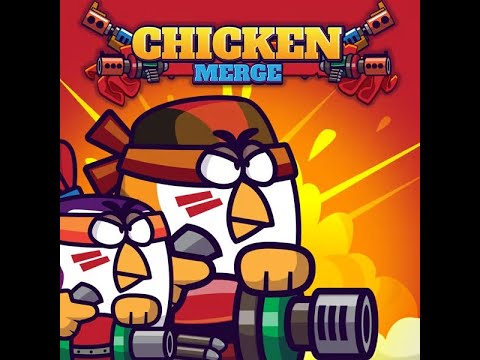

Merge identical chickens to build an army, then drag them into the lane to hold the line against incoming waves.
Rated 4.7: cute animations, optional ads and satisfying merges, though some players find the late upgrade curve steep.
Read discussion →Yes — every game on this site is 100% free. No download, no account and no paywall; press Play and the game loads right in your browser.
Most browser games here run on phones and tablets, though a few titles play best on desktop. If the page loads, the game is playable — just allow mic access where requested.
The guides section covers voice games in depth — from first-session setup and mic fixes to building voice packs. For this game specifically, the guide on this page walks through the details.