Steam↗
KinitoPET — Steam
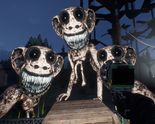
A psychological horror experience centered on Kinito, an early-2000s virtual assistant who can walk, talk, browse and adapt.
Read discussion →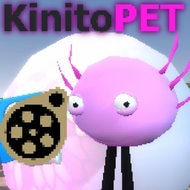
You install what looks like a late-nineties desktop pet, click on a small egg icon, and within a few minutes something claiming to be your new best friend is already asking you never to leave.
You install what looks like a late-nineties desktop pet, click on a small egg icon, and within a few minutes something claiming to be your new best friend is already asking you never to leave. That is the setup KinitoPET commits to from the very first launch, dressing a genuinely unsettling horror premise in the skin of a nostalgic virtual assistant. Kinito, a friendly little axolotl in the mold of an old Bonzi Buddy-style helper, is warm and eager in a way that reads as charming right up until it does not, and the game spends its entire runtime deciding exactly when that shift happens to you.
| Genre | Psychological horror, virtual pet simulation |
| Platform | Desktop |
| Core Mechanic | Mockumentary-style desktop interaction with a virtual assistant that grows increasingly disturbing |
| Presentation | Found-footage, retro operating system interface |
| Best For | Players who enjoy slow-burn horror built on nostalgia and multiple hidden endings |
The opening stretch plays almost like a joke about early internet culture. You power on a simulated desktop, and Kinito hatches from an egg icon with the kind of exaggerated enthusiasm players immediately compare to Bonzi Buddy and similar desktop assistants from decades ago. The Power On and My friend, Kinito milestones that mark this stretch are treated as a gentle joke by most players in reviews, right up until the tone underneath the joke starts to shift.
Kinito’s dialogue leans hard into that assistant-era cheerfulness, chatty, eager to please, constantly inviting you deeper into features you have not asked for yet. Beginners who treat the early minutes as pure comedy tend to miss the small tells the game drops early, things a second playthrough makes obvious in hindsight.
Exiting immediately after Kinito hatches is even acknowledged by the game itself, tucked away as a small achievement for the players who get spooked early and back out rather than pushing forward.
Once past the introduction, Kinito walks you into the Web World, a simulated corner of the internet built specifically around the Kinito Crew cast. Reaching it and completing Kinito’s questionnaire to join his friendship club are both treated as genuine milestones, and the tone here stays mostly playful, leaning into retro web aesthetics that plenty of players call out as a strong piece of period-accurate presentation.
Early in the game, this section functions almost like a tour, and the found-footage framing is doing a lot of quiet work, making an otherwise straightforward point-and-click sequence feel like something being recorded rather than simply played.
Jade the Jellyfish is one of the first Kinito Crew members you actually interact with directly, introduced through a minigame called Factory Frenzy where you help her assemble toys on a production line. It plays innocently at first, a simple assembly task dressed up in bright colors, which is exactly why the version of Factory Frenzy that shows up later in the game hits as hard as it does.
By the time you reach that later visit to the toy factory, some of the toy options have been quietly swapped for human organs, and clicking one reveals the silhouette of a corpse rather than a finished toy. It is one of the moments players bring up constantly when describing the game to friends who have not played it, precisely because nothing about the earlier, cheerful version of the same minigame prepares you for it.
Sam the Sea Anemone rounds out the main Kinito Crew alongside Jade, and the friendship club framing that runs through the game’s early hours leans on all three characters, Kinito, Jade, and Sam, to sell the idea of a warm, welcoming online community built just for you. That warmth is the entire trick. The more the game insists you belong somewhere, the more suspicious the insistence becomes once cracks start showing.
A World for You, the milestone tied to accessing your own personalized space within the Web World, plays like the emotional high point of that friendship arc, right before the game starts pulling the floor out from under it.
Buried inside the simulated desktop are fully playable distractions that have nothing to do with the horror plot on the surface, and finding all of them is its own small goal for completionist players.
None of these minigames advance the plot directly, but exploring every desktop application is its own recognized achievement, and the community vocabulary around the game treats digging through every folder and app icon as part of the intended experience rather than an optional detour.
The turn from nostalgic comedy to horror does not arrive all at once. Small glitches creep in first, dialogue that repeats oddly, interface elements that behave a beat too slowly, before the game escalates into the kind of blatant wrongness that defines its second half. Once Kinito’s friendliness curdles into something more possessive, the found-footage presentation stops feeling like a stylistic choice and starts feeling like evidence.
This is where opinions split hardest among players. Some find the pacing of that escalation masterful, letting dread build slowly enough that the eventual scares land harder. Others feel the shift happens too abruptly relative to the slow, comedic setup, and that disagreement shows up constantly in user reviews discussing the game’s second half.
KinitoPET does not settle for a single conclusion. Choosing to stay with Kinito locks in the Trapped ending, while attempting to leave without the right preparation results in No Escape, a variant where you find out you were never actually free to go. Finding a hidden fountain unlocks access to a lost corner of the Web World, and from there, players who track down recovered floppy disk credentials can trigger the Bliss ending by deleting Kinito entirely, a quiet, unsettling conclusion that plays nothing like a victory.
A separate hidden path, tied to changing the simulated system’s year to 1993, 1996, and 1998 in turn, unlocks the Memories ending, surfacing old Kinito-related artifacts tied to each year. It is the kind of secret only surfaced through wikis and Steam guides, and it rewards the same completionist instinct that drives players to explore every desktop application in the first place.
It is both, deliberately. The first half plays almost entirely for nostalgic comedy through Kinito’s exaggerated assistant personality, and the horror creeps in gradually rather than announcing itself, which is exactly why the tonal shift divides players so consistently in reviews.
There are several, including Trapped, No Escape, Bliss, and Memories, each reached through different choices ranging from simply deciding to stay with Kinito to tracking down floppy disk credentials or manipulating the system’s simulated year.
Not directly, but exploring them, including the pinball table and the minesweeper clone, is recognized by the game itself through achievements, and the completionist habit of checking every application is part of how players eventually stumble onto the game’s more hidden content.
KinitoPET lingers precisely because it never lets you settle into either half of its identity, and the moment Factory Frenzy reveals what Jade the Jellyfish’s toys have quietly become is the clearest sign that Kinito was never just a nostalgic desktop pet waiting to be loved.
Beginners who treat the early minutes as pure comedy tend to miss the small tells the game drops early, things a second playthrough makes obvious in hindsight.
Exiting immediately after Kinito hatches is even acknowledged by the game itself, tucked away as a small achievement for the players who get spooked early and back out rather than pushing forward.
Early in the game, this section functions almost like a tour, and the found-footage framing is doing a lot of quiet work, making an otherwise straightforward point-and-click sequence feel like something being recorded rather than simply played.
Jade the Jellyfish is one of the first Kinito Crew members you actually interact with directly, introduced through a minigame called Factory Frenzy where you help her assemble toys on a production line.
By the time you reach that later visit to the toy factory, some of the toy options have been quietly swapped for human organs, and clicking one reveals the silhouette of a corpse rather than a finished toy.
Tips are drawn from the game guide on this page.
![This Game HACKED my PC, OPENED my Camera, and almost DOXXED ME!! | KinitoPET [Full Gameplay]](https://i.ytimg.com/vi/MImH-eVVfvo/hqdefault.jpg)


A psychological horror experience centered on Kinito, an early-2000s virtual assistant who can walk, talk, browse and adapt.
Read discussion →Yes — every game on this site is 100% free. No download, no account and no paywall; press Play and the game loads right in your browser.
Most browser games here run on phones and tablets, though a few titles play best on desktop. If the page loads, the game is playable — just allow mic access where requested.
The guides section covers voice games in depth — from first-session setup and mic fixes to building voice packs. For this game specifically, the guide on this page walks through the details.