Steam↗
Zoonomaly — Steam reviews
Mostly Positive: visually spectacular with great monster design, but the climbing puzzles grow tedious.
Read discussion →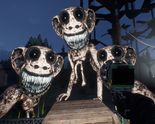
Zoonomaly looks, for the first few frames, like a cheerful stage show frozen in time — bright puppet sets, painted backdrops, a studio built for children’s television.
Zoonomaly looks, for the first few frames, like a cheerful stage show frozen in time — bright puppet sets, painted backdrops, a studio built for children’s television. Play it for more than a minute and that cheer curdles fast, because everything that used to perform on that stage is still down there, and none of it is friendly anymore.
| Genre | Top-Down Stealth Horror |
| Setting | Abandoned puppet television studio |
| Playable Character | The Bandit |
The premise behind Zoonomaly centers on a once-beloved televised puppet show that entertained kids for years before it was abruptly canceled, its studio, props, and puppets simply left to rot where they stood. You play as the Bandit, the show’s puppet lead, who wakes up in that same abandoned studio to discover that the rest of the cast hasn’t stayed dormant — they’ve become something else entirely.
That transformation is the emotional core of the whole game. This isn’t a stranger’s house full of generic monsters; it’s a workplace the Bandit used to know, populated by co-stars turned into threats, which gives every room a specific, personal kind of wrongness that a more anonymous horror setting wouldn’t carry.
Survival in Zoonomaly is framed around three explicit rules baked into the show’s own internal logic: play your part, guard your strings, and don’t look up. Each one maps to an actual mechanic rather than existing as flavor text — breaking character draws attention, exposed strings make the Bandit vulnerable, and looking up at the wrong moment invites exactly the kind of encounter you’re trying to avoid. Internalizing all three simultaneously, especially under pressure, is where most early deaths happen.
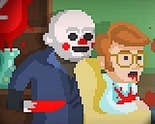
Two enemy types define the threat roster. The stringless are featureless marionettes unbound by any wires at all, able to move anywhere and act on impulse in a way the Bandit fundamentally isn’t. The Grieves are worse to look at directly — bodies cut up and loosely reassembled, with their right hands replaced entirely by scissor blades, a detail that makes their approach as much a visual threat as a mechanical one.
Learning to distinguish the two by sound and silhouette before they’re close enough to matter is a core survival skill, since the correct response to each — stay hidden versus create distance immediately — isn’t interchangeable.
New players tend to treat “guard your strings” as a passive rule rather than an active one, moving through rooms without checking whether their strings are actually exposed to a nearby threat. That passivity gets punished quickly once a stringless or a Grieves closes distance while the Bandit’s guard is effectively down.
The other frequent mistake is looking up reflexively out of curiosity, especially the first time an unusual sound comes from above. Zoonomaly telegraphs that rule clearly for a reason, and ignoring it even once is often enough to end a run.
Part of why Zoonomaly holds up in horror-game conversation is how specific its premise is compared to generic abandoned-building horror. A canceled children’s show, its puppets left in place, its former star waking up among monstrous former co-stars — that’s a sharply defined hook, and it’s part of why the game earned recognition and coverage well beyond a typical small horror release.
It’s built around a compact, tense runtime rather than a sprawling campaign, which keeps its three core rules under constant pressure without the tension diluting over a long session.
Yes — the stringless demand distance and unpredictability awareness, while the Grieves reward recognizing their distinct silhouette and scissor-hand threat before they’re within striking range.
Whatever else changes between playthroughs, Zoonomaly’s studio never stops feeling like a workplace the Bandit used to belong to — which is exactly what makes every corner of it worse than a stranger’s haunted house ever could be.
Zoonomaly looks, for the first few frames, like a cheerful stage show frozen in time — bright puppet sets, painted backdrops, a studio built for children’s television.
Each one maps to an actual mechanic rather than existing as flavor text — breaking character draws attention, exposed strings make the Bandit vulnerable, and looking up at the wrong moment invites exactly the kind of encounter you’re trying to avoid.
New players tend to treat “guard your strings” as a passive rule rather than an active one, moving through rooms without checking whether their strings are actually exposed to a nearby threat.
The other frequent mistake is looking up reflexively out of curiosity, especially the first time an unusual sound comes from above.
Tips are drawn from the game guide on this page.
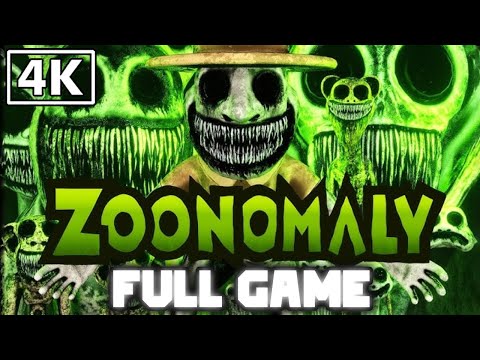


A puzzle-based survival horror game set in an alien-invaded zoo — find key fragments and survive.
Mostly Positive: visually spectacular with great monster design, but the climbing puzzles grow tedious.
Read discussion →Players praise the creepy atmosphere and clever puzzles; sensitive players may find the scares too intense.
Read discussion →Yes — every game on this site is 100% free. No download, no account and no paywall; press Play and the game loads right in your browser.
Most browser games here run on phones and tablets, though a few titles play best on desktop. If the page loads, the game is playable — just allow mic access where requested.
The guides section covers voice games in depth — from first-session setup and mic fixes to building voice packs. For this game specifically, the guide on this page walks through the details.